The examples show how El-Sayed’s campaign used personality to introduce its message across formats, while the Rogers materials highlighted experience and direct comparison. That observation alone cannot explain the election result.
This CROMBA analysis examines a documented sample of campaign materials, not a comprehensive audit of either account or its spending. Campaign descriptions are attributed to their authors; observations about content are separate from proof of an effect on voting.
Football and Love Island: One issue, two formats
Abdul El-Sayed defeated Mike Rogers in Michigan’s U.S. Senate election on 3 November 2026. FOX 2 Detroit reported that the Associated Press called the race early on 4 November. The result offers an occasion to examine the campaign; it does not prove that social media alone produced the win. [1]
On 28 August, Rogers’ campaign announced a 30-second television, streaming and digital ad. It connected football to Rogers’ family background and teamwork, then used remarks attributed to El-Sayed to frame an attack on his opponent. [2]
In a video covered by Mediaite on 1 September, El-Sayed appeared as a contestant introducing himself for a fictional “Senate Island.” The Love Island-inspired format combined his name, family life, healthcare and opposition to corporate money, with football as a visual joke. [3]
The editorial distinction is that Rogers presented a direct argument: here is my experience, and here is my objection to my opponent. El-Sayed placed his message inside a familiar entertainment format. The format became part of the storytelling, beyond simply adding a joke to a speech.
This is a reading of the available examples. It does not establish that all Rogers content followed one format, or that every El-Sayed video succeeded.
From professional credentials to a recognisable personality
Rogers’ official homepage highlights his Army service, FBI work and leadership of the House Intelligence Committee. That introduction builds on service, experience and the ability to confront threats. [4]
In “Girl Dad,” announced by El-Sayed’s campaign on 29 October, he appeared with his daughters and connected fatherhood with schools, clean air, clean water and children’s opportunities. [5]
From a content perspective, the personal scene gives viewers a reason to understand his interest in the issue. The question moves from “What qualifies him?” to “What motivates him?” Both matter, but the answers create different relationships with the viewer.
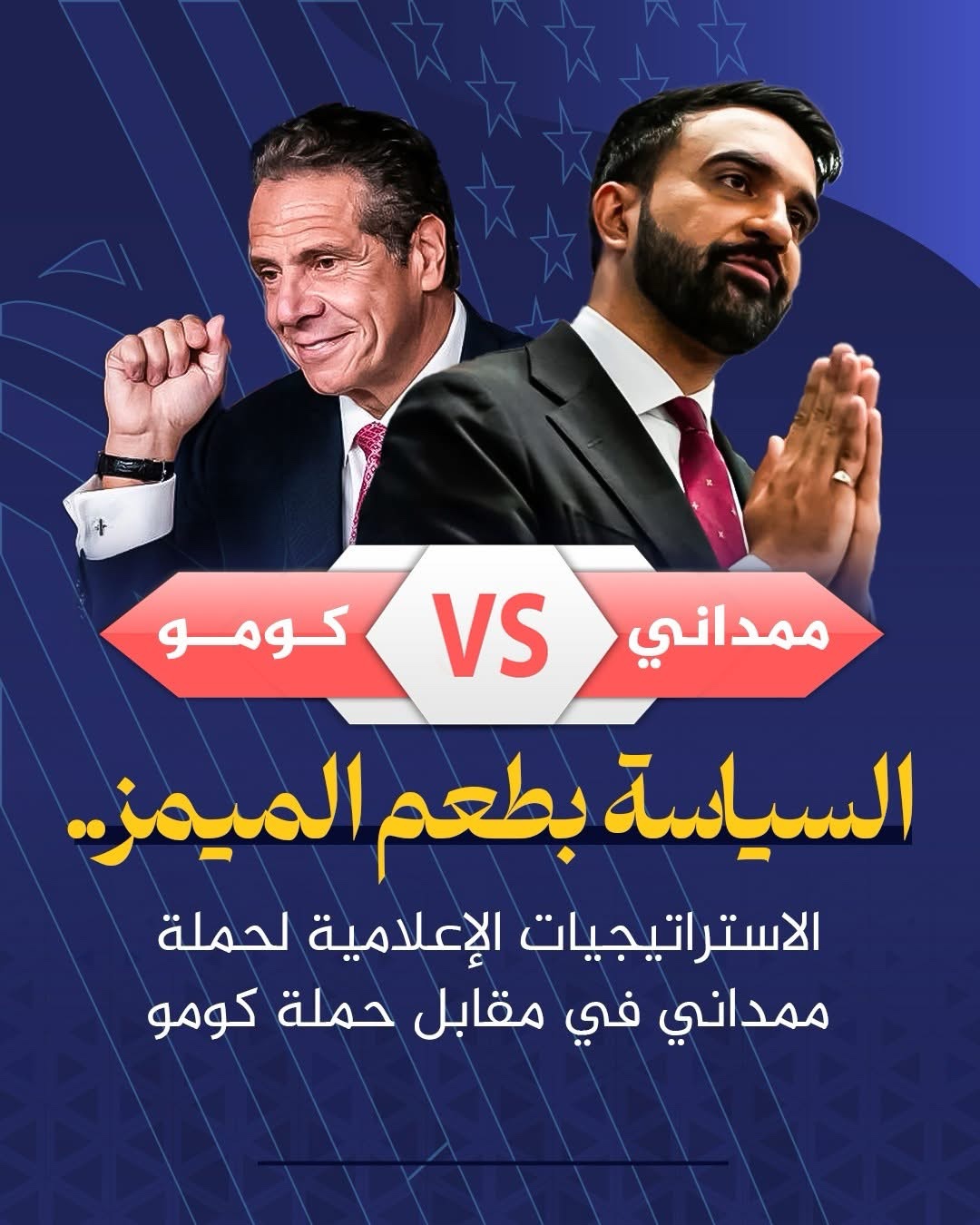
This resembles a theme in our analysis of Mamdani’s campaign against Cuomo: how appearance, language and interaction become part of the message alongside the platform. A shared analytical question does not make the campaigns or electoral circumstances identical.
Creators widened the contexts in which the candidate appeared
In a retrospective published on 5 November, El-Sayed’s campaign said he had interviewed with more than 200 creators through a programme offering regular access. Topics included coffee, sport, parenting and books alongside politics. This is the campaign’s account, not an independent audit of interview numbers or outcomes. [6]
The notable point is that a creator appearance can change the context of the encounter. A viewer might first meet a candidate through a conversation about reading or everyday life, then encounter him discussing policy. Personality becomes visible beyond the usual election statement.
This material does not establish that Rogers did not work with creators. A numerical comparison would require equivalent records from both campaigns. What it establishes is that El-Sayed’s team described this approach as an organised part of its digital work.
Attacking an opponent: From allegation to creative concept
El-Sayed’s campaign also used attacks. A video announced on 18 September used the “revolving door” metaphor to discuss movement between public office and corporate work, targeting Rogers. We are describing the presentation of the allegation, not treating a campaign statement as an impartial judgment. [7]
On 6 October, WIRED described “Mike Rogers Is Watching You”: paid digital video, billboards and an associated website centred on allegations about surveillance and privacy. [8]
Rogers’ campaign, meanwhile, announced a digital and streaming ad on 27 October attacking El-Sayed’s policies through energy costs. That is the campaign’s argument, not an economic conclusion this article independently establishes. [9]
Both sides used attacks. The distinction visible in these examples is how the material was built: a repeatable visual concept spanning media, versus a direct comparison of candidates’ promises and their alleged consequences. The truth of political allegations is a separate question requiring independent verification.
Different formats, a recognisable message
Money in politics, household income and healthcare appear in El-Sayed’s campaign retrospective and in the Senate Island video. That continuity between an entertainment format and the campaign’s account of its message makes the variety worth examining. [3] [6]
A change of format is not itself a problem. A short video can show one aspect, an interview another, and a personal scene the motivation behind a position. The analytical question is whether viewers can follow a clear thread, or encounter disconnected personalities and messages.
On Rogers’ side, professional credentials and direct comparisons supported an image of experience. His campaign also announced Democratic Representative Haley Stevens’ endorsement on 1 November, presenting cross-party support as a signal of trust. [4] [10]
These examples support a comparison of ways to build trust. They do not justify reducing one candidate to “traditional” and the other to “creative” without reviewing the rest of their materials.
What does the comparison show after the victory?
The sample shows several ways to encounter El-Sayed: a candidate explaining a position, a father talking about his children, and a person taking part in entertainment or everyday conversation. The Rogers materials we reviewed foregrounded experience and direct comparison with his opponent. That is the comparison the examples support.
Rogers’ defeat does not make every editorial choice in his campaign wrong. El-Sayed’s victory does not prove that every post added votes. Assessing impact requires more than publicly visible content: audience distribution, repeated exposure, field operations, spending, the political context and changes in voter behaviour.
A view is not a vote. It may come from outside Michigan, an opponent or a repeat viewer. Our guide to interpreting and benchmarking engagement rates examines a related principle: a metric becomes useful when its meaning and comparison limits are clear.
For businesses and professional creators, the relevant reflection concerns consistent personality and messaging across formats. A brand can remain recognisable in a short video, interview and case study without making each asset identical. Its success still depends on the relevant audience and outcomes the business can measure, beyond impressions or reach alone.
Sources and editorial review
Original sources used in this article. Last editorial review: 5 November 2026.
- FOX 2 Detroit — Abdul El-Sayed wins Michigan’s Senate seat4 November 2026
- Rogers for Senate — Football campaign ad28 August 2026; campaign statement
- Mediaite — Abdul El-Sayed’s Love Island-inspired video1 September 2026
- Mike Rogers for Senate — Campaign homepageUndated page; reviewed 5 November 2026
- Abdul for Senate — Girl Dad29 October 2026; campaign statement
- Abdul for Senate — The New Way to Win5 November 2026; campaign’s own retrospective
- Abdul for Senate — The Revolving Door of Politics18 September 2026; campaign statement
- WIRED — Mike Rogers Is Watching You6 October 2026
- Rogers for Senate — Energy-cost campaign ad27 October 2026; campaign statement
- Rogers for Senate — Haley Stevens endorsement1 November 2026; campaign statement
Does your brand feel consistent across content formats?
Talk to CROMBA about connecting your commercial brand’s message with editorial work, design, video production and performance analysis.
Discuss your content strategyExplore our services